

It's the Same Grape — a Grey-Skinned Mutation of Pinot Noir
Pinot Grigio and Pinot Gris both come from a single grape variety: a pale, grey-pink-skinned mutation of Pinot Noir. There's no genetic difference between a vine labeled "Pinot Grigio" in Alto Adige and one labeled "Pinot Gris" in Alsace — it's the same plant, just grown in different places and often farmed and made into wine with different goals in mind. "Grigio" is Italian for grey, "Gris" is French for grey — both names are just describing the grape's actual skin color.
Luna Nuda gets this question directly on our own Pinot Grigio page: "Is Pinot Gris the same as Pinot Grigio? Yes — same grape, two names." That's the whole genetic story. The interesting part is everything that happens after the grapes are picked.
Where the Names Split: Italy, France, and Everywhere Else
The name a bottle uses is mostly a geography and tradition question, not a legal style requirement, but it does tend to track style pretty closely:
Italy almost universally calls it Pinot Grigio — you'll see it out of Alto Adige, Trentino, Friuli, and the Veneto, all leaning into a lighter, crisper interpretation.
Alsace, France calls it Pinot Gris, and Alsatian versions are typically richer and rounder, sometimes with a touch of residual sweetness, especially in the region's late-harvest styles.
Oregon, particularly the Willamette Valley, is one of the biggest Pinot Gris regions in the U.S., and most Oregon producers follow the French naming convention — which tends to track with a fuller-bodied style closer to Alsace than to Italy.
Elsewhere — California, Germany (as Grauburgunder), Australia, New Zealand — you'll see either name used, and the name alone won't always tell you which style you're getting.
The Real Difference Is Style, Not the Grape
This is the part that actually matters for what's in your glass. Italian-style Pinot Grigio is typically:
- Fermented in stainless steel, not oak, to preserve freshness
- Picked earlier, for higher acidity and a lighter body
- Made bone dry, with little to no residual sugar
- Pale straw in color, with flavors that lean toward green apple, citrus, and a mineral edge
French and Oregon-style Pinot Gris, on the other hand, tends to be:
- Given more skin contact and sometimes some oak or lees aging, for texture
- Picked riper, for a fuller body and more concentrated fruit
- Occasionally off-dry, especially from Alsace
- Deeper gold in color, with flavors that lean toward stone fruit, pear, honey, and sometimes a faint smokiness
Neither style is "more correct" — they're just built for different moments. Italian Pinot Grigio is the glass you reach for on a Tuesday because it's easy and refreshing. Richer Pinot Gris is closer in weight to a lighter Chardonnay.
How to Tell Which Style You're Getting From the Label
It's not a hard rule, but it's a useful one: if the label says "Pinot Grigio," expect Italian-style crispness. If it says "Pinot Gris," especially from Alsace or Oregon, expect something rounder and richer. The name on the label is essentially a style cue even though nothing legally requires a winemaker to follow it.
Luna Nuda's Take: Why We Call It Pinot Grigio
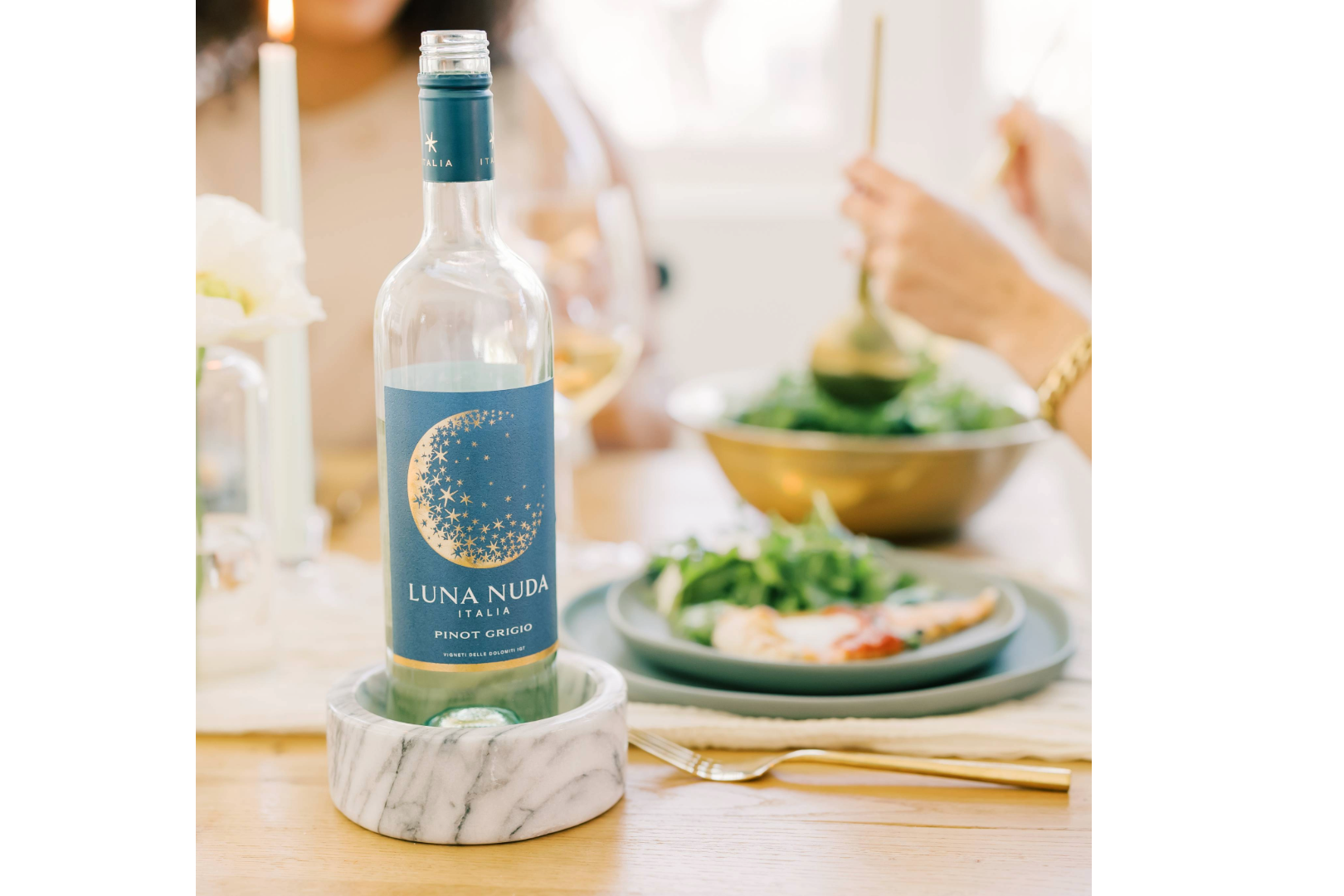
Luna Nuda's Pinot Grigio is 100% estate-grown at Castelfeder Winery in Alto Adige — Italy's northernmost wine region — so it's genuinely Pinot Grigio by both grape and style. The vineyard sits at 600 feet in an alpine climate on limestone soil, and the wine spends its time in stainless steel, not oak. What that adds up to: bright golden apple and citrus, with a hint of alpine minerality, and nothing here trying to be bigger or richer than it is. It's built to be the easy, crisp glass — the kind you don't have to think too hard about pouring on a random weeknight.
Quick Answers
Is Pinot Gris sweeter than Pinot Grigio?
Not always, but it can lean that way, especially from Alsace, where some styles carry noticeable residual sweetness. Italian Pinot Grigio is almost always bone dry.
Can the exact same vineyard produce both styles?
Technically yes — the style comes from winemaking choices (harvest timing, fermentation vessel, skin contact), not just the vine itself. But in practice, regional convention is strong, and most producers stick to the style their region is known for.
Is one healthier or lower in calories than the other?
Not meaningfully. Calorie count tracks mostly with alcohol level and residual sugar, not the Grigio/Gris label. A dry Pinot Grigio and a dry Pinot Gris of similar ABV land in roughly the same range.
Why does Italian Pinot Grigio taste so much lighter than what I remember from a French or Oregon bottle?
That's the style difference at work — earlier picking, stainless steel fermentation, and no extended skin contact all keep Italian versions crisp and light rather than rich.
Is Pinot Grigio always Italian?
No — plenty of producers outside Italy use the name "Pinot Grigio" specifically to signal they're making it in that lighter, crisper style, regardless of where the grapes are grown.
How should Pinot Grigio be served?
Chilled, around 45 to 50°F, straight from the fridge. A few minutes out before pouring brings the fruit back if it's too cold to taste much of anything.
You Might Also Like
- The Luna Nuda Guide to Pairing Italian Wine With Food
- Where Luna Nuda Wines Actually Come From
- Is Prosecco the Same as Champagne? Here's the Real Difference
Responsible drinking note: enjoy Luna Nuda wines responsibly and in moderation.