

Alto Adige: Where the Pinot Grigio Grows
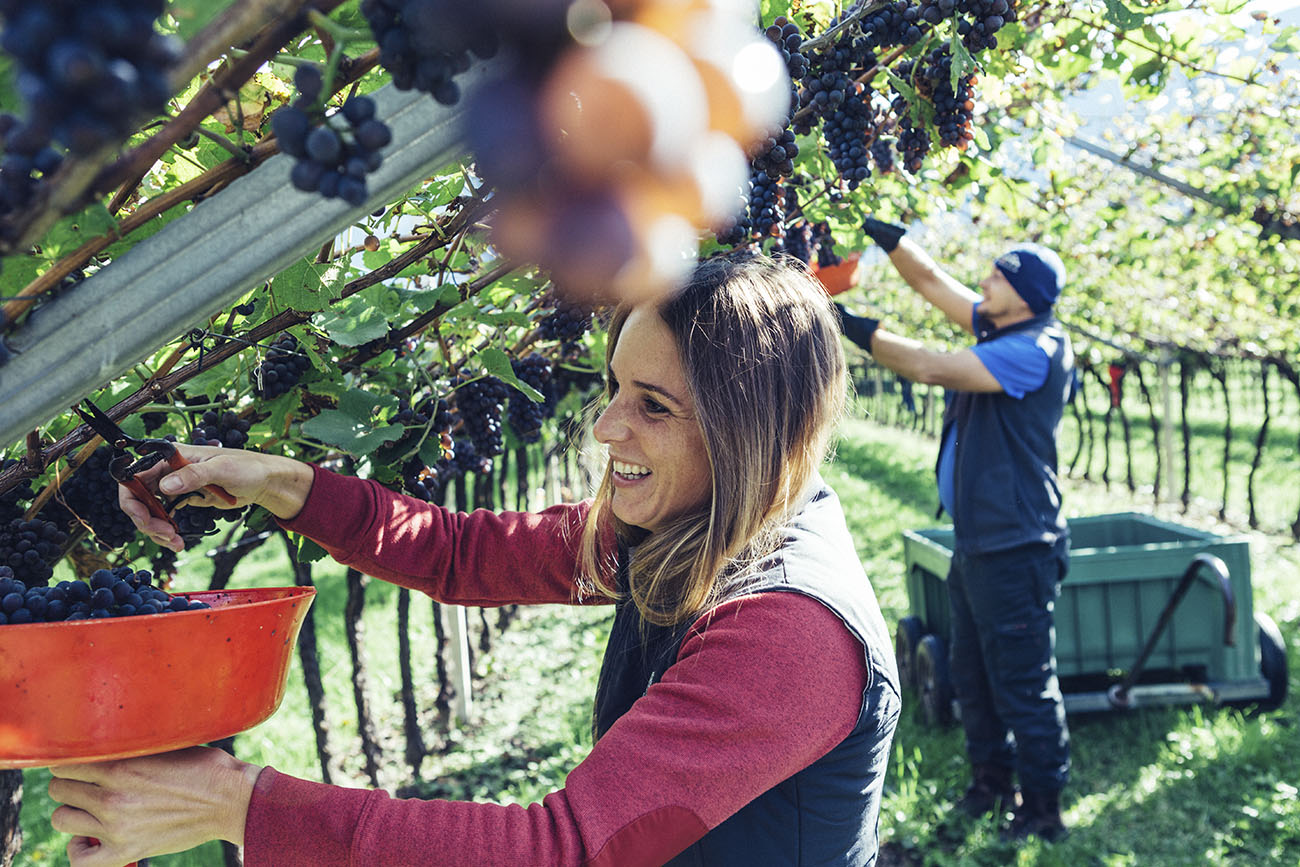
Luna Nuda Pinot Grigio is estate-grown and hand-harvested at Castelfeder Winery in Italy’s Bassa Atesina Valley — part of Alto Adige, the northernmost wine region in Italy. The vineyard sits 600 feet up in an Alpine climate, on limestone soil with heavy chalk content. That combination is exactly what gives the wine its signature crisp apple and citrus flavor, with a hint of alpine minerality you won’t find in a Pinot Grigio grown somewhere warmer.
Castelfeder was founded by Alfons Giovanett, who believed the moon’s phases affected everything from pruning to bottling — the idea behind the name Luna Nuda, or “naked moon.” Today his grandchildren, Ivan and Ines, run the winery.
Treviso: Home of the Prosecco
Luna Nuda Prosecco and Prosecco Rosé are both made by Cantina Montelliana, a cooperative of 400 grape growers in Treviso, in Northeast Italy. Established in 1957, Cantina Montelliana is one of the region’s most respected producers of Prosecco DOC and DOCG. Both wines are made using the Charmat method — the traditional way, where the second fermentation happens in a pressurized tank instead of the bottle, which is what keeps Prosecco’s bubbles soft and consistent instead of sharp.
Abruzzo: Where the Rosé Grapes Are Grown
Luna Nuda Rosé starts in Abruzzo, where Montepulciano grapes grow natively. The Giovanett family hand-selects the fruit there, at a 10-hectare vineyard sitting 1,000 feet up in a Mediterranean climate, on clay soil with enough chalk to make dry farming possible. From there, the grapes travel back to Castelfeder Winery in Alto Adige for vinification — one wine, two regions.
Sicily: Home of the Red Blend
Luna Nuda Red Blend is the outlier of the portfolio in more ways than one — grown entirely in Sicily, then brought north to Alto Adige for vinification. It’s also the only Luna Nuda wine where the blend itself changes with each vintage. The one constant is Nero d’Avola; the 2024 vintage pairs it with Syrah and Merlot. In the glass, expect a brilliant ruby red color, an intense scent of berries, and a medium-bodied, delicate character that drinks easy rather than heavy.
Why the Region Actually Matters
None of this is trivia for trivia’s sake. Alto Adige’s alpine climate is what makes a Pinot Grigio taste crisp instead of flat. Treviso’s Charmat-method tradition is what makes Prosecco’s bubbles feel soft instead of aggressive. Sicily’s warm, volcanic-influenced soil is what gives Nero d’Avola its dark fruit depth. Every Luna Nuda wine is made where it’s actually good at being made — which is a big part of why it tastes like a wine that costs more than it does. You’re paying for the region and the craft, not the marketing budget of a bigger name.
Quick Answers
What Italian region is Luna Nuda Pinot Grigio from?
Alto Adige, Italy’s northernmost wine region, grown and hand-harvested at Castelfeder Winery.
Where is Luna Nuda Prosecco made?
Treviso, in Northeast Italy, by Cantina Montelliana — a cooperative of 400 grape growers founded in 1957.
Is all Luna Nuda wine made in the same place?
No. The portfolio spans four regions — Alto Adige, Treviso, Abruzzo, and Sicily — each matched to the wine it’s best suited to produce.